
Electrifying your home isn’t one big leap - it’s a series of simple, practical upgrades that most households can make over time.
These appliances and machines - cooking, heating, hot water and transport - cover the biggest sources of energy use in Australian homes. Together, they’re where most of the costs, emissions, and health impacts come from.
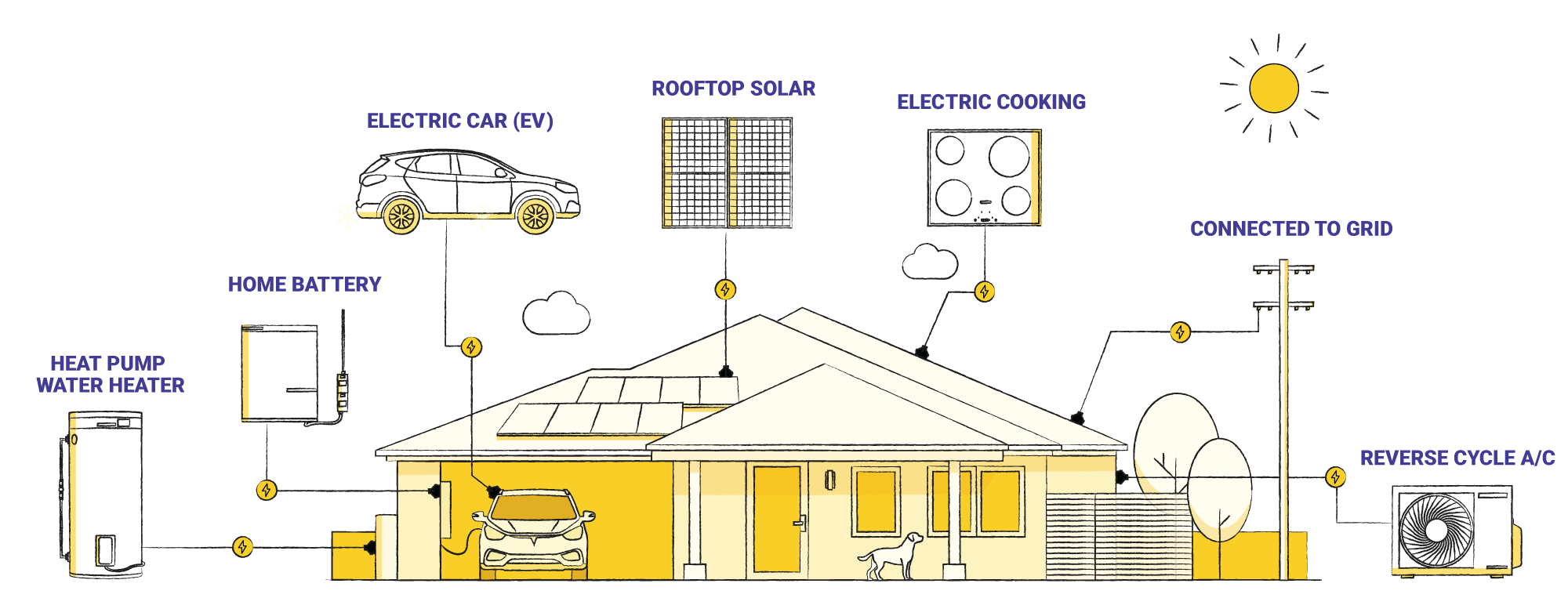
Planned upgrades and switch when it fails
Replacing these with efficient and clean electric alternatives and powering them with rooftop solar and a home battery will transform your power bills and lower emissions.
The good news is you don’t have to tackle them all at once. Homes naturally turn over appliances and vehicles every 10–15 years. By choosing efficient electric options at those moments instead of gas or petrol appliances, you can steadily transform your home without unnecessary cost or disruption.
Each step works on its own - lowering bills, improving comfort, and reducing pollution. But they’re even more powerful together. Solar powers your home. Batteries store that energy for later. Efficient electric appliances make the most of every unit of electricity. And an EV lets you take those savings on the road.
Home Electrification Fact Sheets: Costs, Installation and Savings Explained
Our fact sheets are here to make switching to electric straightforward.
They walk you through the key upgrades - solar, batteries, induction cooking, heating, hot water and electric vehicles - in plain English, so you know exactly what to expect.
You’ll find clear answers to questions like:

Will this work in my home?
What does it cost to install?
How much could I save on my energy bills?
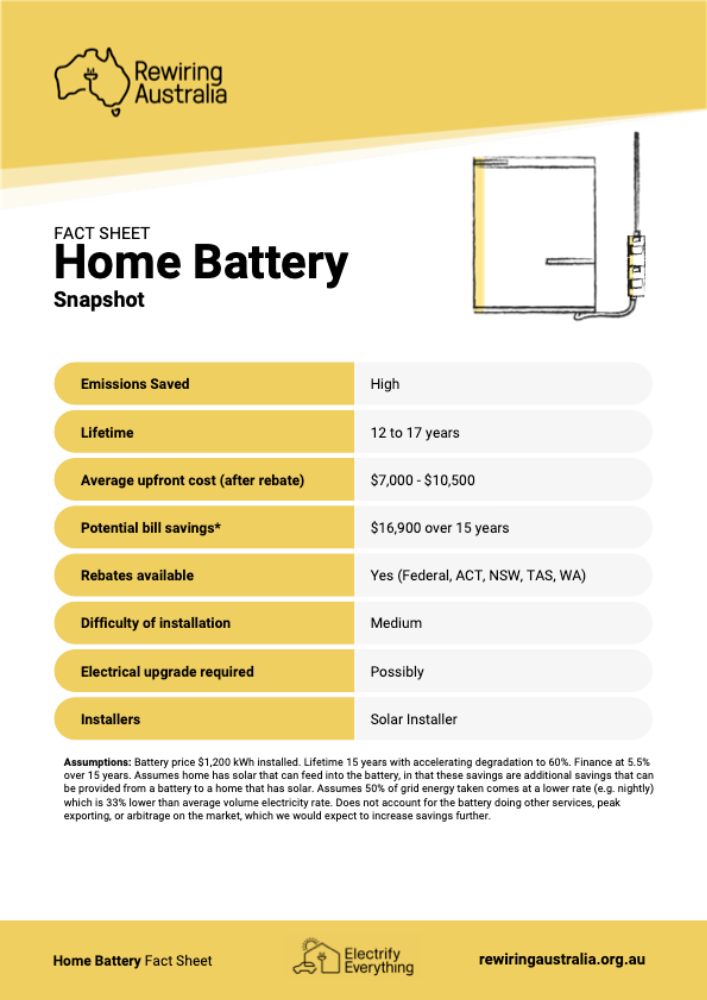
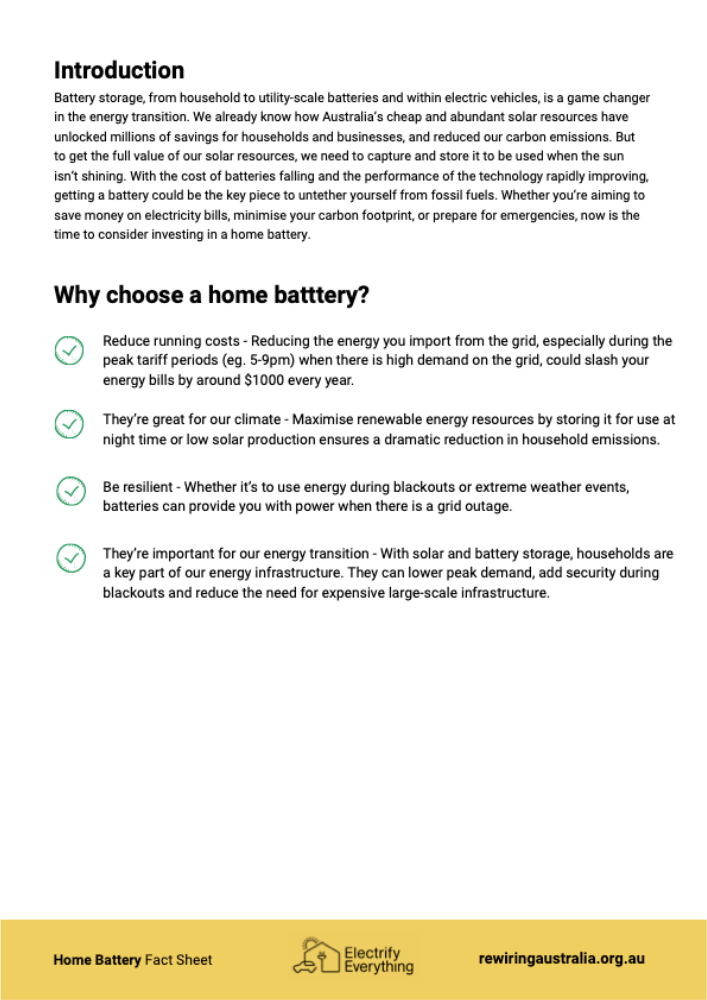
Home batteries: How they can power your home and your car
This guide explains what home batteries do, how long batteries last and how to determine what battery size to install.
Covers:
- Using more of your own solar
- Their safety record
- Costs, lifespan, and rebates
- How to choose the right installer
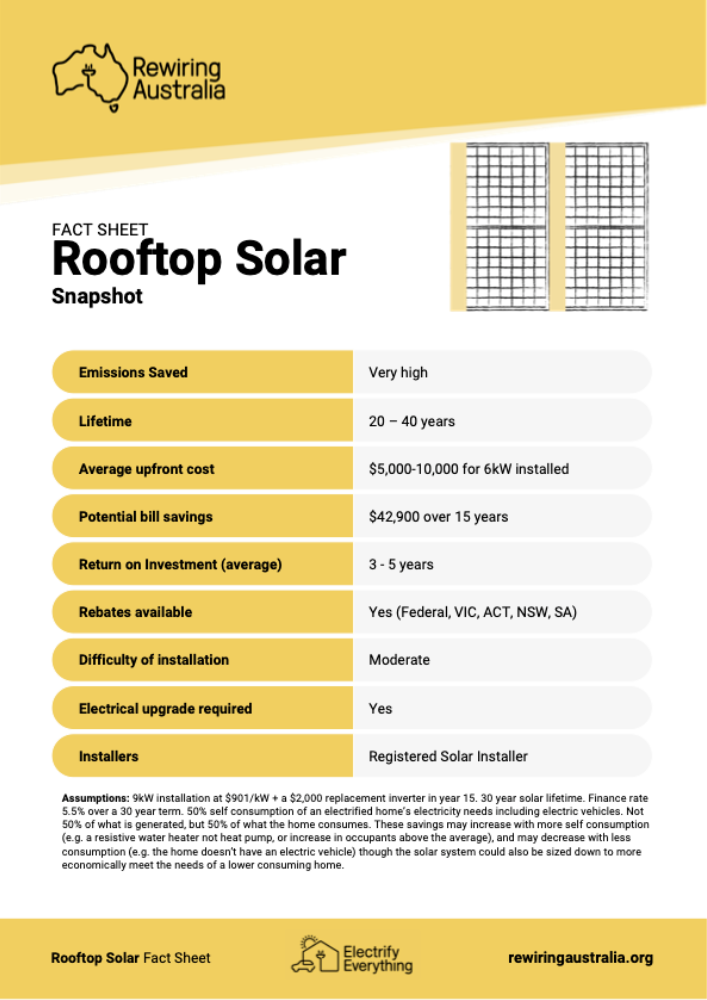
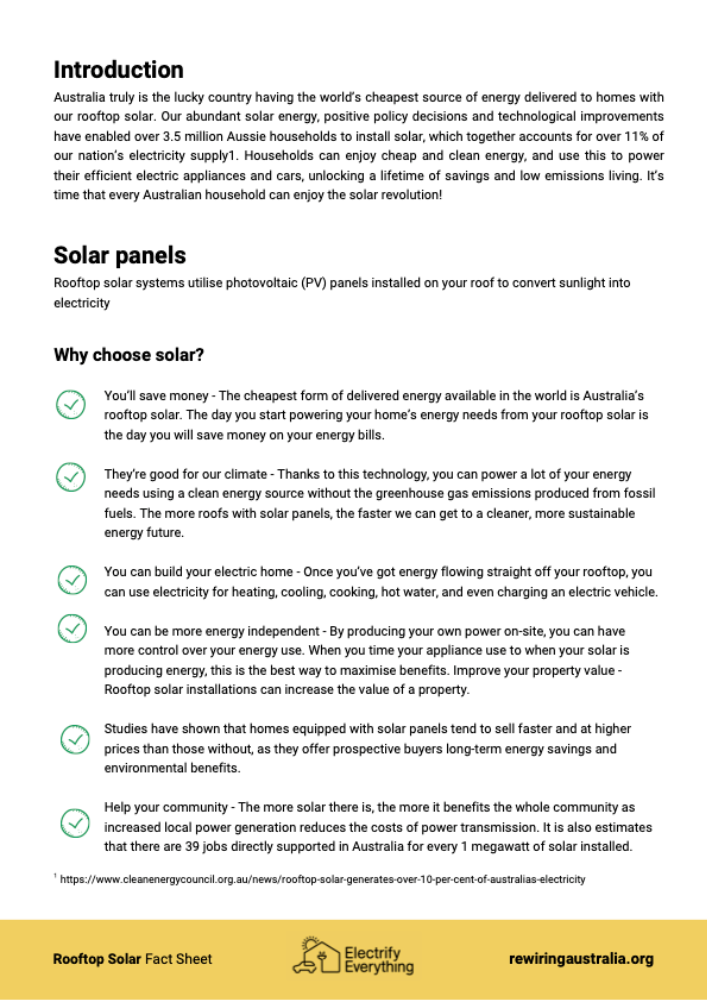
Rooftop solar: make your own electricity at home
A practical guide to rooftop solar, explaining how solar panels work, how much electricity they can produce, how much you might save on your energy bills, and how solar fits into an all-electric home.
Covers:
- Costs, payback, and savings
- What size system you might need
- How solar works with batteries, EVs, and electric appliances
- How to future proof your solar system
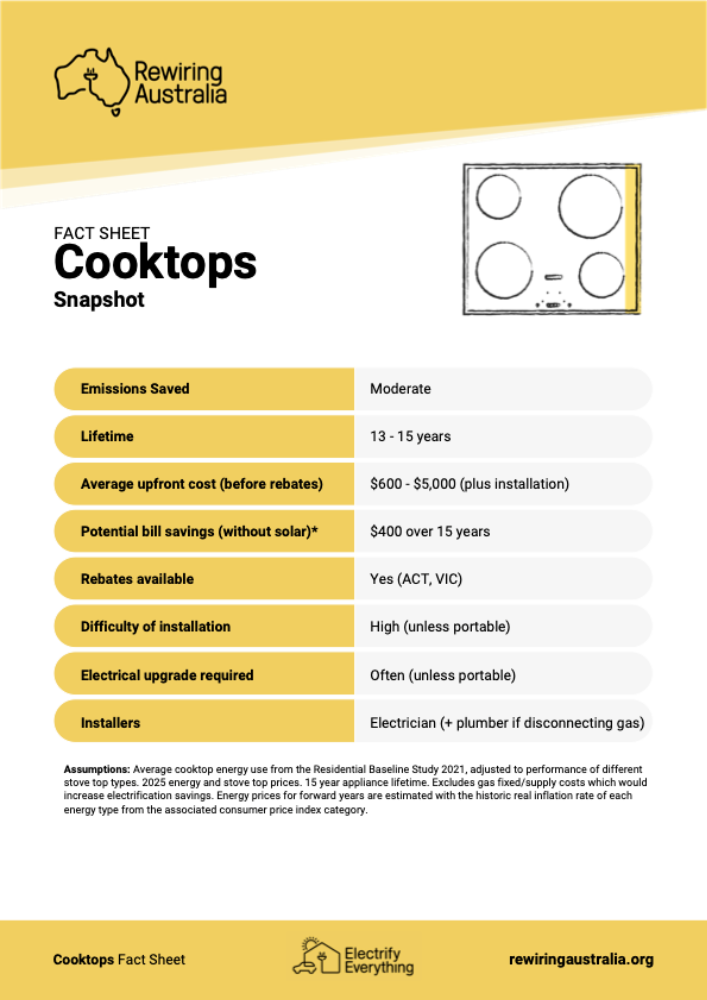
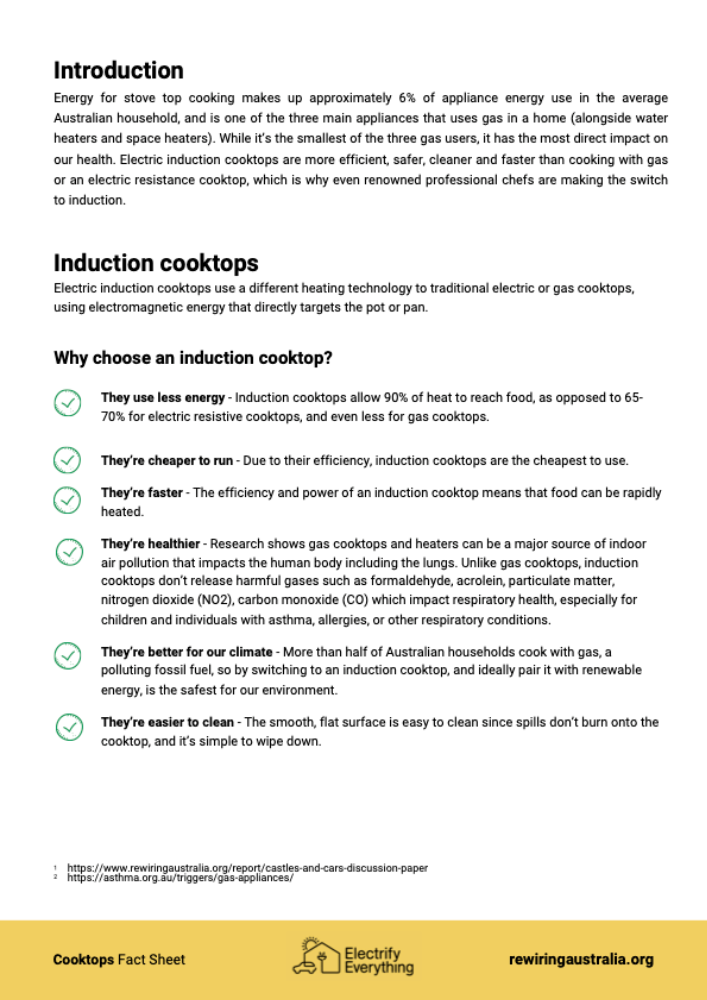
Cooking with induction
This guide explains how induction cooktops work, why they’re healthier and more efficient than gas, what they cost and tips on installation.
Covers:
- Health impacts of gas cooking
- Cooking performance and safety
- Costs, installation, and rebates
- Common myths about induction
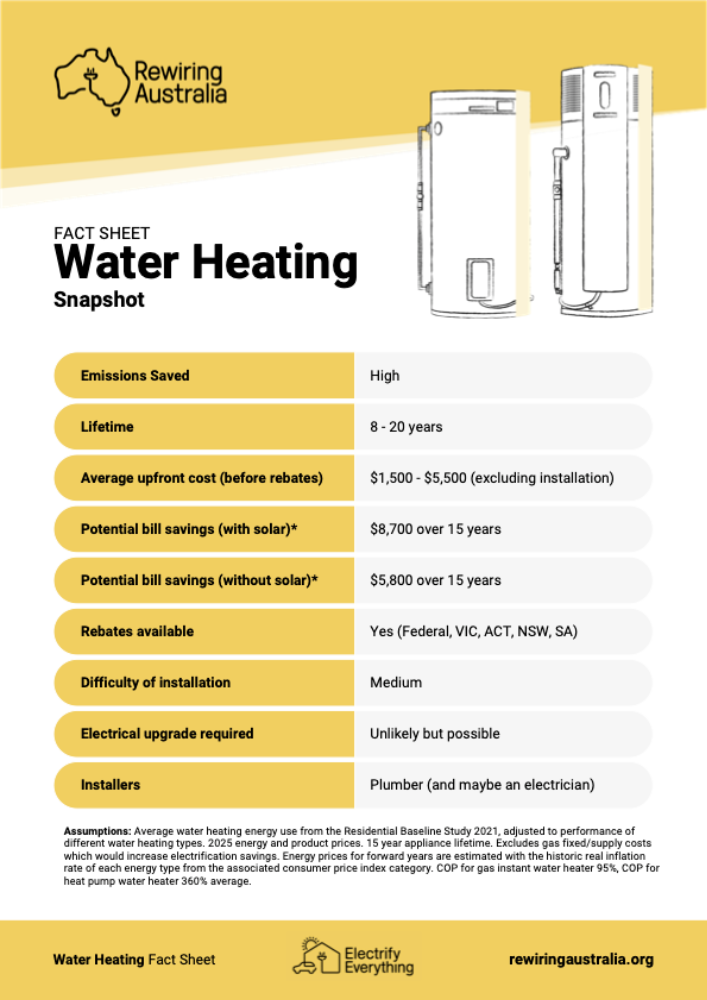
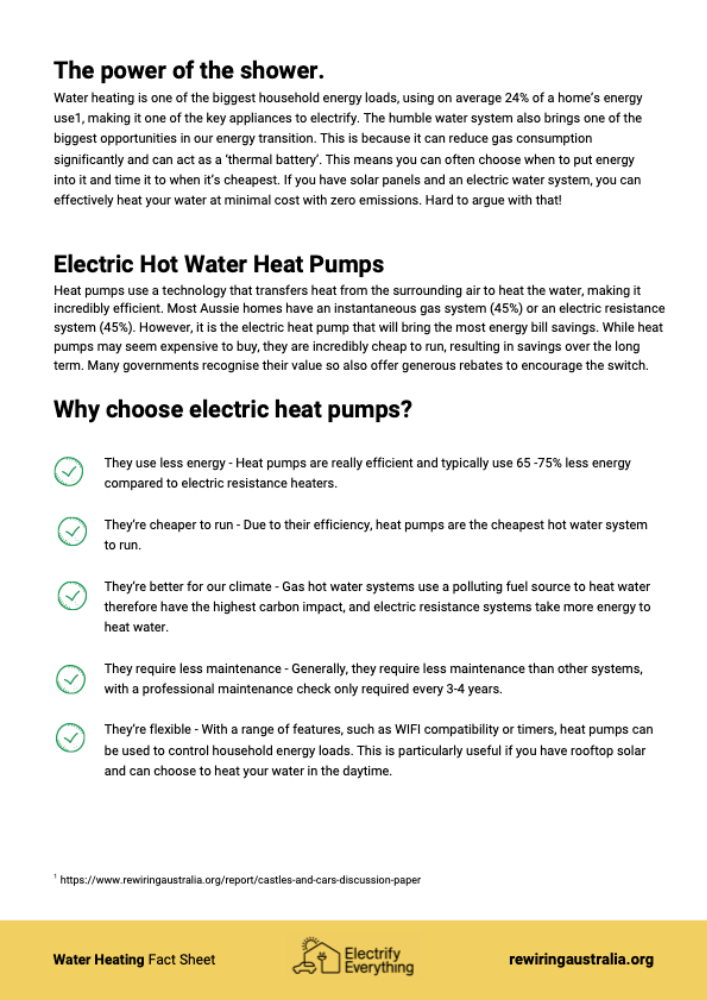
Hot water heat pumps explained
This guide explains how heat pump hot water systems work, how much energy they use, and why they’re replacing gas systems in Australian homes.
Covers:
- Running costs and energy savings
- Noise, reliability, and cold-weather performance
- Rebates and replacement timing
- What to consider before installing
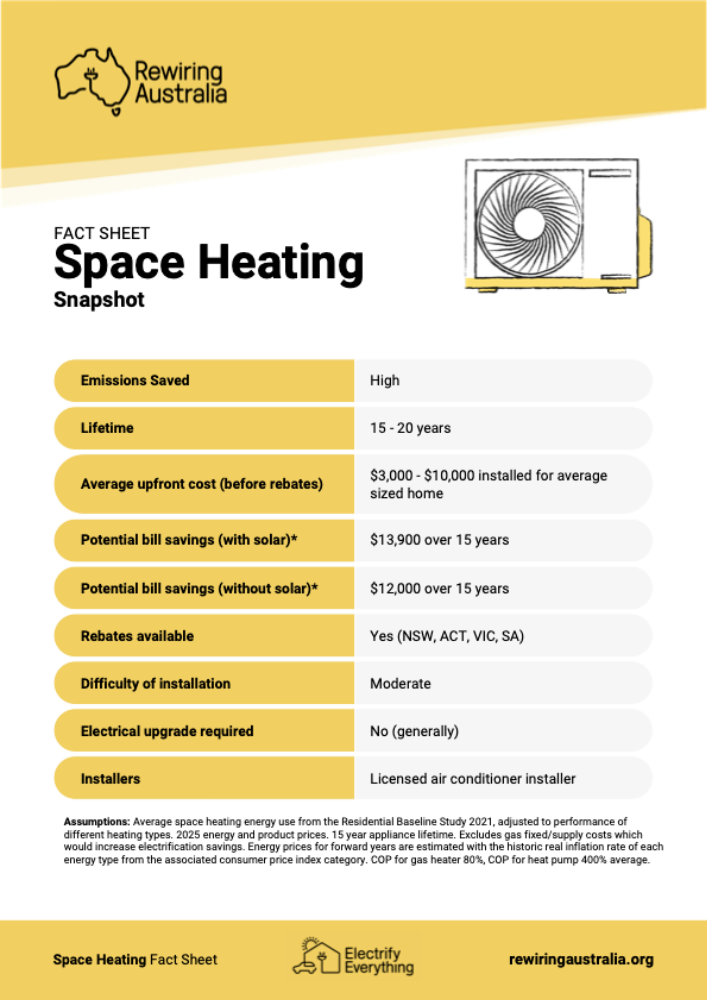
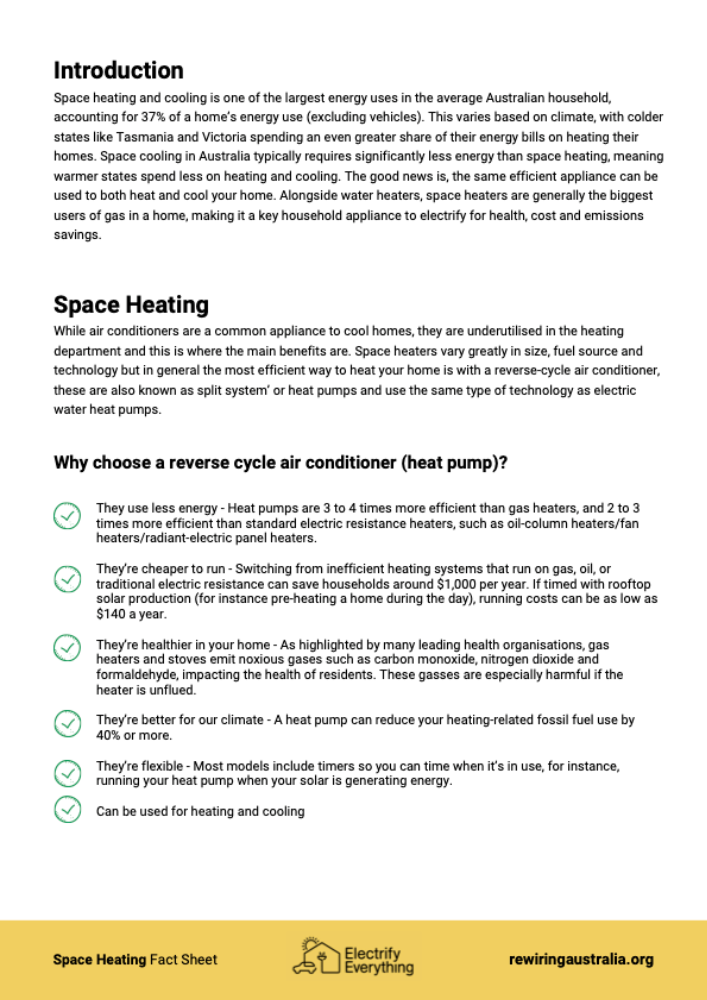
Heating and cooling your home with electricity
A guide to reverse-cycle air conditioning, including why it’s the most efficient way to heat a home and how it compares to gas heating.
Covers:
- Heating performance in cold climates
- How much you will save
- System sizing and comfort
- What to think about before installing
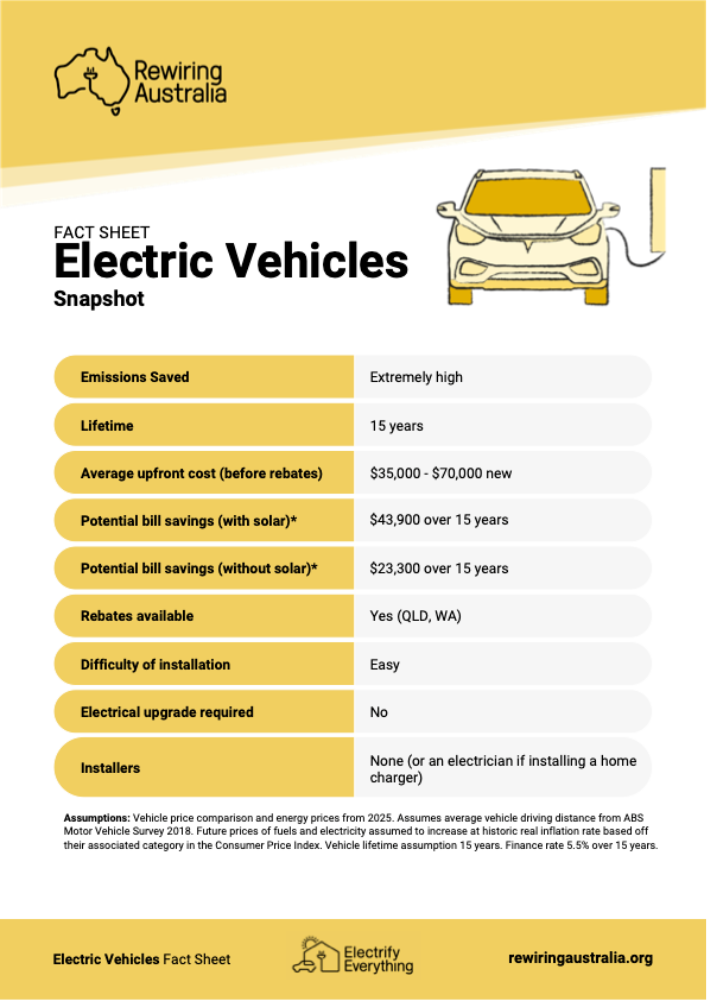
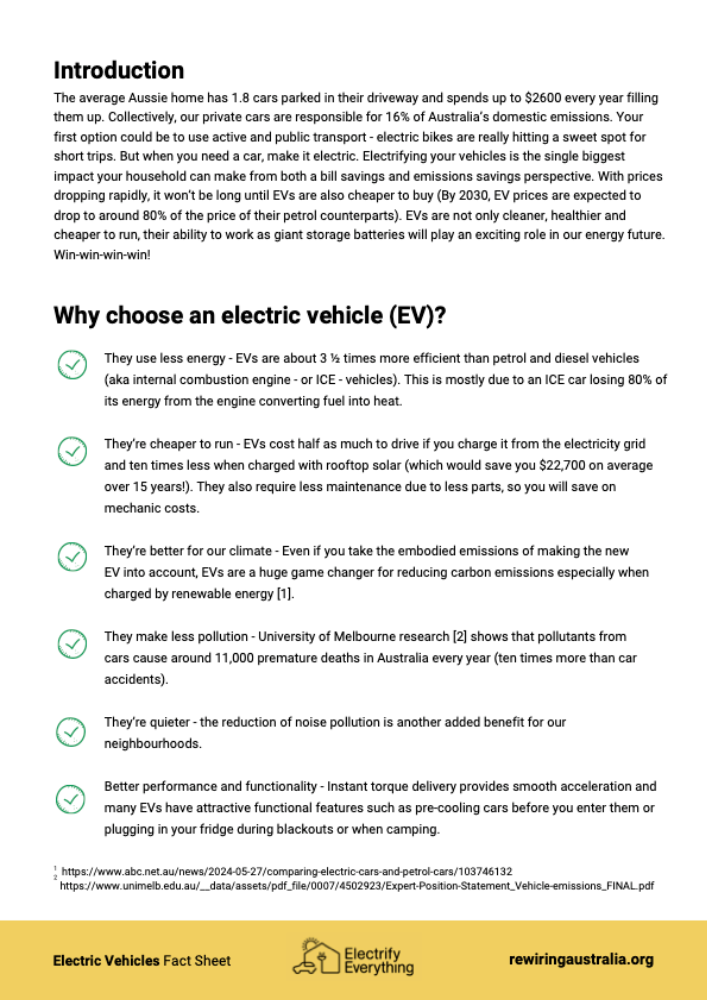
Electric vehicles: What to know before you switch
Answers the most common questions about EV range, charging, costs, and whether electric cars work for regional driving and long trips.
This guide covers:
- Home and public charging
- Upfront costs vs lifetime savings
- Range and battery lifespan
- Incentives and exemptions
FAQs
Answers to the questions people ask most about electrifying their home.
Gas appliances - especially in the kitchen - release pollutants into your home.
Switching to electric means:
• No indoor gas pollution
• Better air quality
• A safer home for your family
Most of Australia’s emissions come from burning fossil fuels for energy - things like cars, heaters, hot water systems and stoves.
A big chunk of that comes from our homes.
The good news? We can do something about it.
By switching to efficient electric appliances and powering them with clean electricity, households can dramatically cut their emissions.
There’s no point sugar-coating it: electrifying your home can cost money upfront.
There are rebates and subsidies available, but they don’t always cover everything.
That’s why the goal isn’t to do it all today. When it dies, electrify!
You don’t need a full renovation plan.
Just keep this in mind:
• When your gas cooker breaks → consider induction
• When your hot water system goes → look at a heat pump system
• When your car needs replacing → think electric
Each step:
• Lowers your bills
• Reduces your household emissions
• Moves you off expensive and volatile fossil fuels
And when millions of households do the same thing?
That’s how real change happens.
You don’t need a full renovation plan.
Electrifying your home is:
• Cheaper to run over time
• Better for your health
• Essential for cutting emissions
You don’t have to do everything at once.
Just start with the next decision.
Check out our savings calculator to see how much you could save by going electric.
Still have questions?
Get in touch